
Blocked Sink: how to unblock a sink tips
That sinking feeling when the water just won't go down? We've all been there. A blocked sink is a real nuisance, but before you panic or start dismantling your plumbing, a few simple first steps can often get things moving again.
Your First Moves Against a Blocked Sink
More often than not, a slow-draining sink is a cry for help. It’s a sign that something is starting to build up down below. The trick is to act early and know what you're up against.
In the kitchen, the usual suspects are fats, oils, and grease. They go down the drain as a liquid but quickly cool and solidify, creating a sticky trap for food scraps. Over time, this gunky mess grows until it chokes the pipe. In the bathroom, you're typically dealing with a tangled knot of hair, soap scum, and grime from things like toothpaste.
Finding Out What You're Dealing With
First things first, have a quick look. Pop on a pair of rubber gloves, remove the strainer or plughole cover, and shine a torch down there. You'd be amazed how often you can spot the problem right away. A clump of hair or old food can be easily pulled out by hand, and just like that, your problem is solved.
Ultimately, the first move is much about figuring out the problem as they are about fixing it. By trying the simplest things first, you can often sort it out in minutes. If not, you’ll at least have a much better idea of what you’re up against before trying something a bit more heavy-duty.
"It might surprise you to learn that it was recorded in 2025 that 37.5% of blocked drains in Britain were caused by fats, oils and grease and 33.3% caused by inappropriate items being flushed. Discover what else is blocking Britain's drains."
Using a Plunger and Clearing the U-Bend
The humble plunger is a classic for a reason, but there's a knack to using it properly. It’s not just about frantic pumping; it’s about creating a powerful column of water to physically push the blockage out of the way.
For sinks, make sure you're using a standard cup plunger, not the flanged one meant for toilets. The whole game is creating an airtight seal. To do that, you need a few inches of water in the sink—just enough to submerge the rubber cup. This water is the secret ingredient; it turns your effort into hydraulic force, which is far more effective than just pushing air.
Press the plunger cup firmly over the plughole, making sure you have a complete seal.
Mastering the Plunging Technique
Start with one gentle push to get any air out from under the cup. Then, get into a rhythm of sharp, firm plunging motions for about 20-30 seconds. You’re aiming to use the water's momentum to break up and dislodge whatever is stuck down there.
After a good go, break the seal by pulling the plunger away quickly. If the water drains with a satisfying gurgle, you've done it. If not, don't give up just yet—give it another two or three attempts before deciding it's time for a different approach.
How to Tackle the U-Bend
When even a determined plunging session doesn't work, the culprit is almost certainly lurking in the U-shaped pipe under the sink. We call it the U-bend (or P-trap), and while it cleverly stops nasty drain smells from coming up, its curve is the perfect place for grease, food scraps, and hair to build up into a solid mass.
Dealing with it is a pretty straightforward job, but you absolutely must prepare for the mess.
Expert Tip: Before you touch anything, grab a bucket and some old towels. Place the bucket directly under the U-bend to catch the water and sludge that will come out. Trust me, you'll be glad you did.
With your bucket ready, locate the two large compression nuts holding the U-bend in place. They’re usually plastic and designed to be loosened by hand. If they're a bit stiff, a pair of water pump pliers will give you the grip you need.
Unscrew them slowly, letting the trapped water drain out first. Once they're loose, the U-bend piece will come right off.
Now for the grim part. Tip the contents into your bucket and inspect the pipe. You’ll probably see exactly what’s been causing all the trouble. An old bottle brush and some hot, soapy water are perfect for scrubbing it clean.
Once it's clear, simply reassemble the parts, making sure the rubber seals are clean and seated correctly. Hand-tighten the nuts until they're firm but don't go overboard. Finally, run the hot tap for a minute to flush any last bits of debris and, most importantly, to check for any leaks.
Trying Natural Solutions and Using a Drain Auger
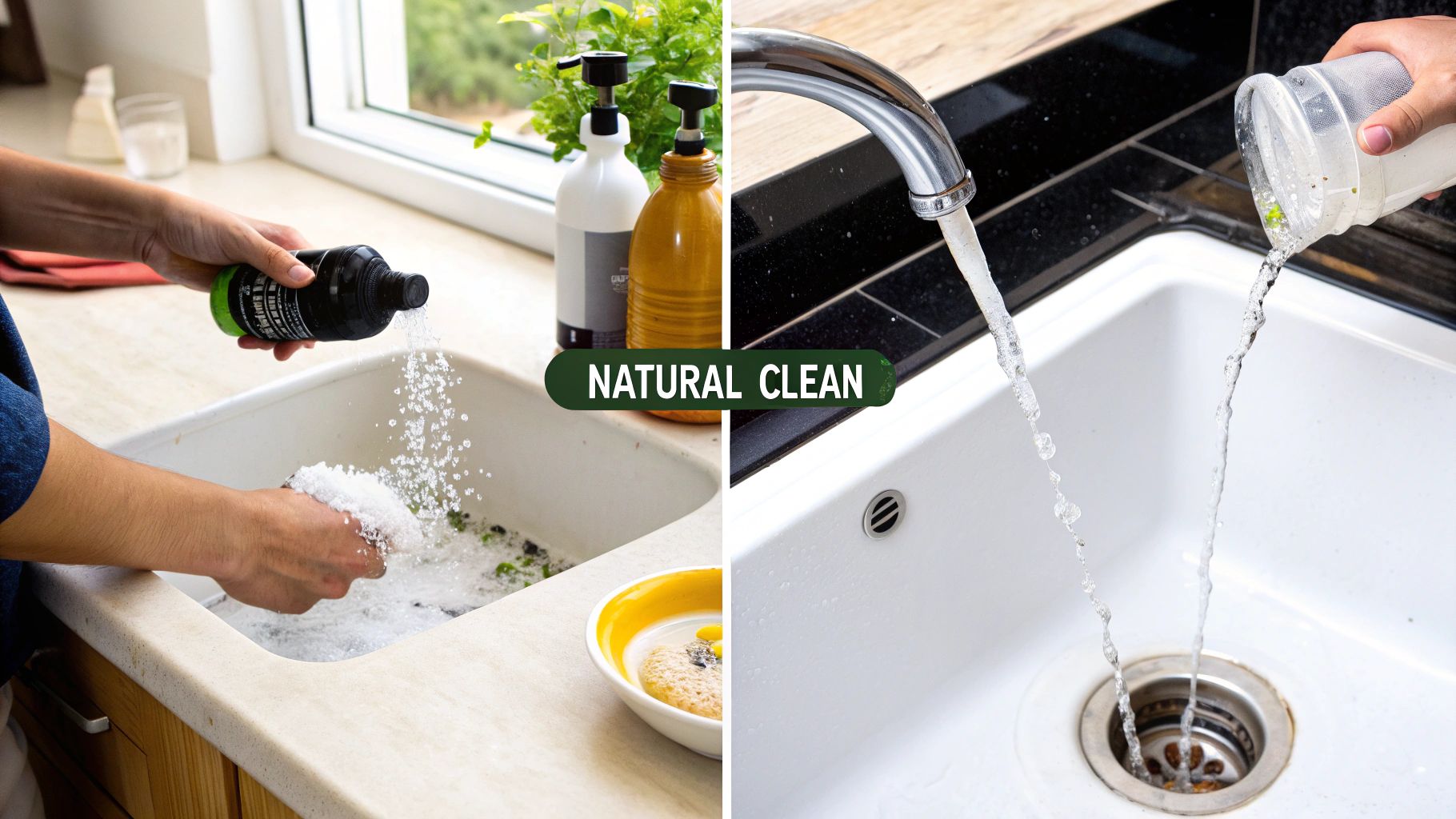
So, the plunger hasn't worked its magic. Don't worry, there are still a few more tricks up your sleeve before you need to call in the professionals. These next methods range from a gentle, natural approach for minor build-ups' to a more direct tool designed to tackle deeper, more stubborn clogs.
One of the most trusted home remedies is the old-school combination of baking soda (or bicarbonate of soda) and white vinegar. It's more than just an old wives' tale. The gentle pressure and agitation can be surprisingly effective at breaking down the soft, greasy gunk that often causes kitchen sink blockages.
It's a great first port of call for slow-draining sinks where you suspect grease is the main issue. Just keep in mind its limitations – this method isn't going to shift a solid object like a lost bottle cap or a dense clump of hair.
The Baking Soda and Vinegar Trick
To give this a go, you’ll first need to get rid of any standing water in the sink. Bailing it out with a cup allows the mixture to get straight to the blockage instead of just being diluted.
Here’s what to do:
Pour roughly half a cup of bicarbonate of soda straight down the plughole.
Immediately follow it up with half a cup of white vinegar.
Pop the plug in quickly to trap the fizzing reaction inside the pipe, where it can do its work.
Now, leave it. Give it at least 20-30 minutes to bubble away at the grime. For a really sluggish drain, you could even leave it a bit longer.
Finish the job by carefully running warm water down the drain to flush out all the loosened debris.
This is a safe, eco-friendly way to clear a minor blockage and works wonders as a regular maintenance routine to keep your pipes clear.
Getting Serious with a Drain Auger
When you're dealing with a more serious blockage that’s hiding further down the pipe, you need a tool that can physically reach it. Enter the drain snake, or drain auger. It’s a long, flexible, coiled wire that you can feed into your pipework to either break up or pull out whatever is causing the problem.
Using an auger might look a bit daunting, but it's a simple process if you take your time. You can start by feeding the coiled end into the plughole. However, for much better access, I'd recommend removing the P-trap (the U-shaped pipe under the sink) and feeding the snake directly into the waste pipe.
Slowly push the snake into the pipe while turning the handle clockwise. You'll feel some resistance when you hit a bend in the pipe – just keep turning the handle gently, and it should navigate the corner. When you feel a different, softer resistance, you’ve found the clog.
"At this point, you can either push and rotate the auger to break the blockage into smaller pieces that can be flushed away, or you can try to hook onto it and pull the whole mass back out. The golden rule here is patience and a gentle touch. Never force it, as you could easily damage your pipes."
Once you’re confident the blockage is gone, slowly retract the auger. Reassemble the P-trap, making sure the seals are tight, and then run the hot tap for a few minutes. This will flush out any remaining debris and confirm your sink is finally draining freely.
Common Mistakes That Can Worsen Your Blockage
When you're staring at a sink full of murky water, the temptation to grab the nearest, strongest solution is completely understandable. But in the heat of the moment, it’s surprisingly easy to make a simple clog much, much worse. Knowing what not to do is every bit as important as knowing the right steps to take.
The Problem with Quick Fixes
The first instinct for many is to reach for a bottle of heavy-duty chemical drain cleaner. They promise to dissolve everything in their path, and frankly, that sounds great when your sink won't empty. The problem is, these aggressive chemicals aren't very discerning.
They can't tell the difference between a lump of greasy food waste and the pipe itself. Over time, these corrosive agents can eat away at PVC pipework and degrade the rubber seals in your plumbing, creating leaks and far more serious problems than the original blockage.
Applying Too Much of a Good Thing
It’s not just chemicals, either. Even well-intentioned DIY methods can backfire if you're not careful.
Take boiling water, for example. It’s fantastic for shifting greasy clogs in sturdy metal pipes. However, if your waste pipes are PVC plastic, repeatedly dousing them with boiling water can cause them to soften, warp, or even crack. If you have plastic pipes, stick to very hot water from the tap—it’s a much safer bet.
The same goes for brute force. It's natural to think a bit more muscle will do the trick, but going too hard with a plunger can put immense pressure on pipe joints, potentially forcing them apart. Likewise, being too aggressive with a drain snake can damage inside of your pipes or, in a worst-case scenario, puncture a fragile section completely.
Knowing When to Throw in the Towel
Perhaps the biggest mistake of all is pushing on with a DIY fix when it’s clearly not working. If you’ve tried a couple of methods and that water is still going nowhere, it’s a sure sign the problem is bigger than you thought.
Continuing to try different things can quickly lead to:
Compacting the blockage: You might accidentally push the clog further down the pipe, making it far more difficult for anyone to remove.
Causing collateral damage: A slipped tool or a burst seal can lead to a nasty leak under the sink, damaging your floors and cabinets.
Ignoring the real issue: A clog that keeps coming back often signals a deeper problem in your drainage system that simple tools can’t fix.
There’s no shame in admitting defeat. Recognising the limits of a DIY approach is crucial. If you're not making any headway, the safest and most effective thing to do is put the tools down and call for professional help.
Knowing When to Call a Professional
DIY solutions are brilliant for sorting out common sink blockages, but it’s crucial to recognise when a problem is beyond the scope of a plunger. I’ve seen it time and again: pushing on with a fix that isn’t working can easily turn a simple issue into a much more complex and expensive one. The key is knowing the warning signs that tell you it's time to put the tools down.
You’ve tried everything—plunging, clearing the U-bend, maybe even having a go with a drain snake—but the water is still stubbornly refusing to drain. If you’re making no real progress after a couple of sensible attempts, that’s a clear signal to stop. Continuing could risk compacting the blockage further down the pipe or, worse, damaging the pipework itself.

Signs of a Deeper Drainage Problem
Certain symptoms are dead giveaways that the issue isn't just a simple clog in your sink's trap. Think of these as red flags pointing to a significant blockage deeper in your main drainage system, which requires specialist equipment and expertise.
Pay close attention if you notice any of the following:
Recurring Blockages: If you clear a blockage only for it to come back a few days or weeks later, it means you're only tackling a symptom, not the root cause.
Multiple Fixtures Backing Up: When the kitchen sink, bathroom sink, and even your toilet are all draining slowly, the problem is almost certainly in the main drain line serving your property.
Persistent Foul Odours: A nasty smell that won't go away, even after cleaning the U-bend, often indicates trapped, decaying waste in a part of the system you just can't reach.
Strange Gurgling Sounds: Hearing gurgling from your plughole when another appliance drains, like the washing machine, is a classic sign of trapped air in the main drain line caused by a partial blockage.
These issues are simply not fixable with DIY tools. Calling a professional isn't admitting defeat; it’s the smartest and safest decision you can make to prevent serious damage down the line.
The Professional Toolkit and What It Costs
Drainage specialists like us come equipped with advanced tools designed to diagnose and resolve these complex problems efficiently. For stubborn blockages, we often use specialised equipment like high-pressure water jetting, which scours the inside of pipes, blasting away grease, scale, and debris far more effectively than any mechanical snake.
"For more elusive issues, a flexible camera is our go-to for a detailed inspection. Learning more about how a CCTV Drain Survey works shows how this technology pinpoints the exact location and nature of a problem—be it a collapsed pipe, tree root intrusion, or a severe blockage—without any disruptive guesswork."
For homeowners needing this level of help, the cost to unblock a sink in the UK typically ranges from £100 to £200. Of course, this can vary based on the blockage's severity and location, but it certainly highlights why prevention is always more economical.
Ultimately, while tackling a simple blockage yourself is satisfying, knowing when to call for backup protects your home, saves you time, and ensures you get a proper, long-lasting solution.
Your Sink Unblocking Questions Answered
Even after trying a few DIY fixes, it's natural to have some questions rattling around. I've been in the drainage business for years, and I've heard them all. Here are the answers to some of the most common queries we get from homeowners across the UK when they're staring down a blocked sink.
How Can I Prevent My Sink From Blocking Again?
It’s an old saying, but it’s true: prevention is always better than cure.
In the kitchen, the golden rule is to get tough on what goes down the plughole. Scrape every last bit of food, especially anything greasy or oily, into your food waste or bin before the plate ever touches the water. Pouring hot fat down the drain is a guaranteed recipe for a blockage down the line. A simple sink strainer is also a brilliant, low-cost investment for catching those bits that try to escape.
When it comes to the bathroom sink, the number one enemy is almost always hair.
Pop a dedicated hair catcher over the plughole. They’re cheap, effective, and will surprise you with how much they catch.
Once a week, just let the hot tap run for a solid minute. This simple habit helps melt away the soap scum and other gunk that builds up over time.
Are Chemical Drain Cleaners Ever a Good Idea?
Honestly, we strongly advise against them. The promise of a quick, pour-and-go fix is tempting, I get it. But the harsh, corrosive chemicals in those bottles can cause some serious, long-term damage to your plumbing. We’ve seen them eat away at older metal pipes and even damage modern PVC fittings. On top of that, they're not great for the environment and can be a real safety hazard in your home.
"A professional approach is always safer and more effective. Using physical tools like FlexShaft machines or high-pressure water jetting gets the job done properly, clearing stubborn clogs without risking the integrity of your pipework."
What if My Kitchen Sink and Toilet Are Both Blocked?
This is a major red flag. If you’ve got multiple drains backing up at the same time – the sink, the loo, maybe even the shower – the problem isn't a simple sink trap. It's almost certainly a blockage in your main sewer line outside the property.
This is a situation that needs professional attention, and fast. Trying to tackle a main line blockage yourself is a non-starter. Drainage specialists have the right gear, like CCTV drain cameras and high-pressure jets, to find the problem and clear it safely. Sometimes, what looks like a blockage can actually be a sign of deeper pipe damage, and you can learn more about the solutions for drain repair to see how these serious issues are sorted.
Do These Methods Work for a Sink with a Waste Disposal?
You need to be extremely careful here. Never, ever use a plunger or chemical cleaners on a sink with a waste disposal unit. You’ll risk damaging the motor or, the blades, and the seals inside.
The gentle baking soda and vinegar method is usually safe, but only if you ensure the unit is completely switched off at the mains first. If that doesn't do the trick, the blockage is probably within the unit itself or further down the pipe, and that’s a job for a professional.
If you've given it your best shot and are still stuck with a stubborn blockage, or if you suspect something more serious is going on, don't hesitate to contact Super Drainage Solutions Ltd for a fast, professional solution and a free, no-obligation quote. Call for expert help on 0330 133 7790 or Get A Free Quote today.