Blocked Outside Drain: how to unblock a blocked outside drain tips
Before you even think about grabbing a pair of gloves and lifting the drain cover, it’s worth taking a moment to play detective. Is it definitely a blockage you’re dealing with? The signs are not usually hard to miss if you know what you're looking for.
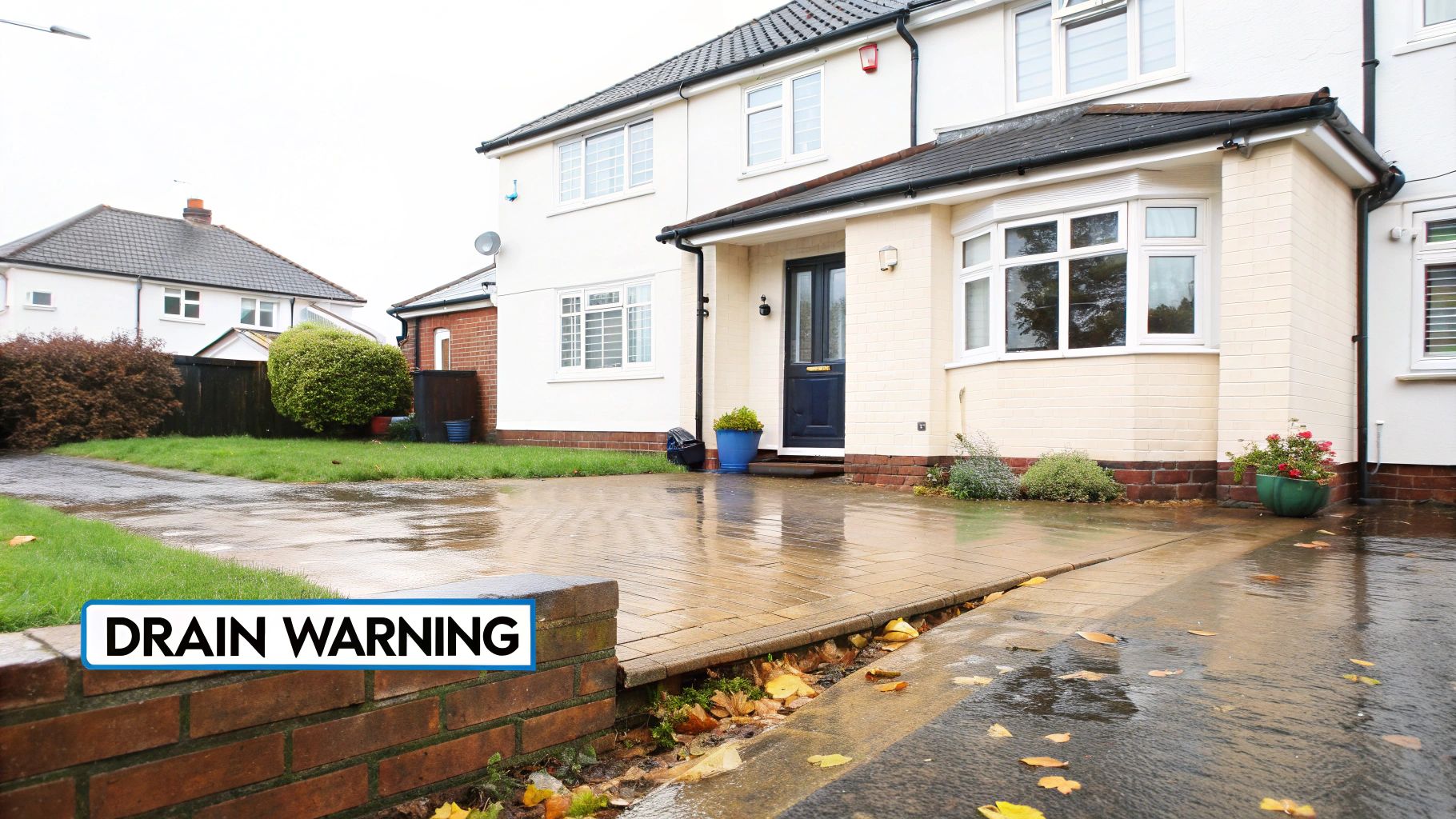
A nasty smell hanging around the garden or strange gurgling noises from your pipes are classic giveaways. And, of course, the most obvious clue is water pooling where it shouldn't be, especially after a typical North West downpour.
How to Spot a Blocked Outside Drain
Catching a blocked drain early can genuinely save you a fortune and a world of stress. Some problems scream for attention, while others are a bit more subtle, creeping up on you over weeks or months. Learning to recognise these signals means you can step in before a small issue becomes a full-blown emergency.
The Blatantly Obvious Signs
These are the big, impossible-to-ignore red flags that tell you something’s wrong. If you spot any of these, it's time to act.
Foul Odours: This is usually the first thing people notice. If there's a distinct, sewage-like smell lingering around your drain covers, it’s a clear sign that waste and stagnant water are trapped down there.
Slow-Draining Water: Does water hang around the gully for ages after it rains or after you’ve used an outside tap? If it isn't draining away quickly, the flow is almost certainly restricted.
Gurgling Sounds: Hearing strange bubbling or gurgling from your drains, sinks, or even the toilet is a tell tale sign. It's often caused by trapped air fighting its way past a partial blockage in the pipework.
A blocked outside drain is more than just a nuisance—it's a potential health risk and a direct threat to your home. Tackling it at the first sign is always the best approach.
The More Subtle Clues
Sometimes, the evidence isn't quite so in-your-face. These sneaky signs often point to a problem that’s been building up for a while.
Damp Patches on Walls: If you notice persistent dampness on an external wall, especially near a downpipe, it could mean water is overflowing from a blocked drain and soaking into the brickwork.
Increased Pest Activity: Blocked drains are a five-star hotel for pests like rats and flies, offering both food and a place to breed. A sudden rise in their numbers around your property could well be linked to a drainage issue.
Your Essential DIY Drain Unblocking Toolkit
Before you even think about lifting a drain cover, getting your gear sorted is half the battle. This isn't about buying a van's worth of professional equipment; it's about having the right bits and bobs to work safely and get the job done without any fuss.
First things first: your safety. Drain water is nasty stuff, plain and simple. It’s often teeming with bacteria, so a pair of heavy-duty rubber gloves is an absolute must. You'll also want some safety goggles – trust me, the last thing you need is foul water splashing back into your eyes.
Gear for Manual Clearing
For that initial dig-out, where you're just clearing the gunk you can see, a few household items will do the trick.
A sturdy, flat-headed screwdriver is ideal for gently lifting the drain cover without cracking it.
Your garden trowel or a small scoop will be invaluable for scooping out the obvious sludge, leaves, and silt that have gathered in the gully.
Have a strong bucket and some tough bin bags on standby to dispose of all the muck you pull out.
Think of it like this: being prepared means you can work cleanly and efficiently. Having these simple tools ready to go makes the whole process a lot less grim.
Manually Clearing Your Outside Drain
Alright, with your gloves on and your tools ready, let's get stuck in. Tackling the blockage by hand is always the best place to start. More often than not, the problem is right at the surface, and this simple clear-out is all it takes.
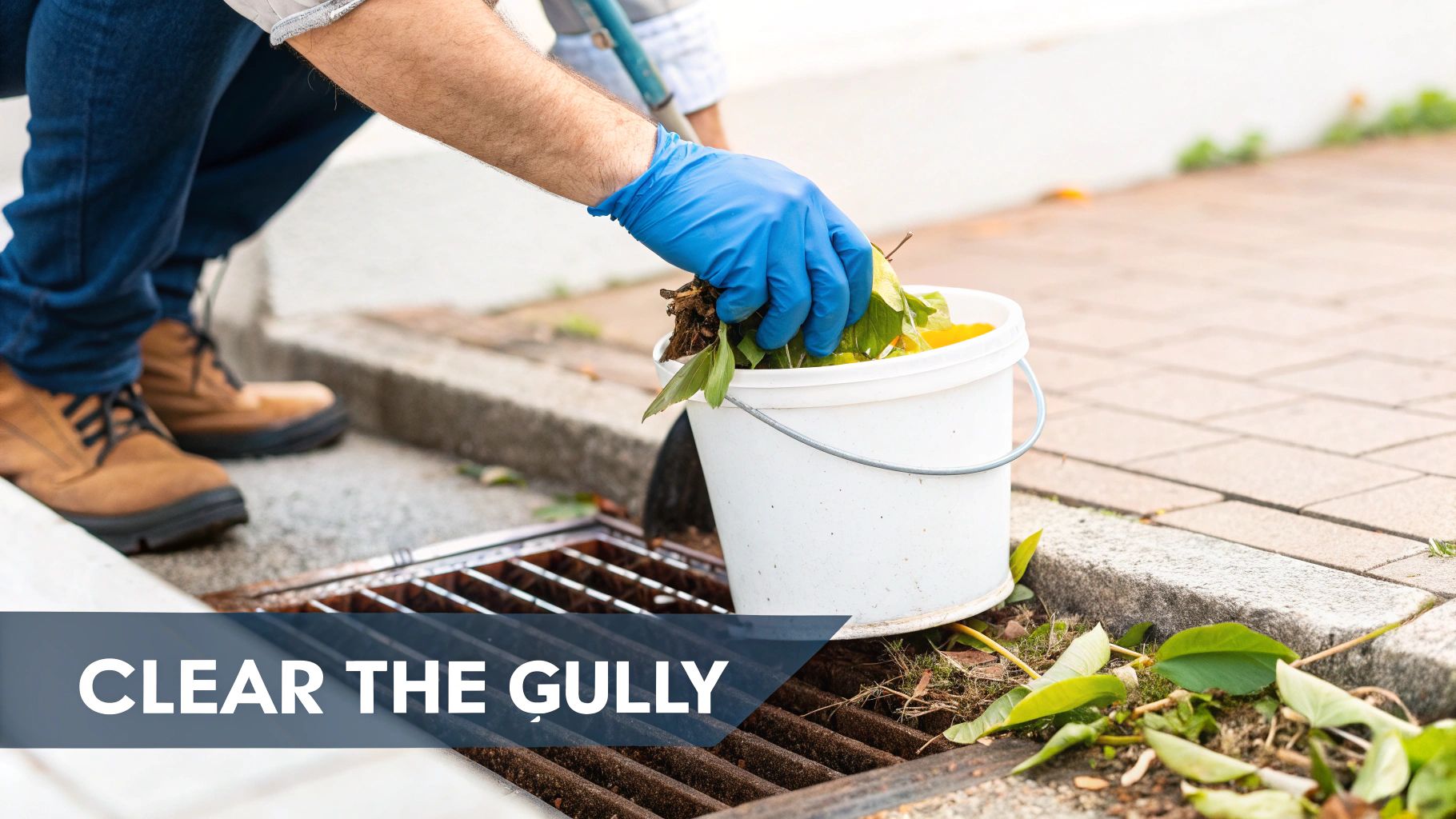
First things first, you need to lift the drain cover or gully grid. If it's a bit stiff, a flat-headed screwdriver is perfect for gently levering it up without cracking the plastic or concrete surround. With the cover off, you’ll probably see the culprit straight away—a lovely sludge of leaves, silt, twigs, and general garden mess.
Removing Surface Debris
Grab your trowel or a small scoop and start getting all that visible gunk out of the gully trap. Just scoop it straight into your bucket. Don't be shy about using your gloved hands to pull out any bigger, matted clumps of leaves.
You'll almost certainly find some stubborn bits just out of arm's reach. Here's a little trick our engineers sometimes use on a job: straighten out an old wire coat hanger and bend a hook at the end. It's surprisingly effective for fishing out hidden debris without having to get your whole arm down there.
One crucial tip: Whatever you do, never try to force anything further down the pipe. Pushing debris deeper will just compact it, and that can turn a simple fix into a much bigger, more expensive headache.
Dealing with Greasy Build-up
If the blockage feels fatty or greasy, it’s a good bet that your kitchen waste pipe connects to this drain. You can try a bucket of warm water mixed with a good squirt of washing-up liquid and pour it slowly down the drain. The detergent is brilliant at breaking down and emulsifying grease, helping to wash it away safely.
Once you’ve cleared everything you can, give the drain a good flush with a garden hose. If the water runs away freely, job done! If it's still backing up, it means the blockage is further down the line, and it’s time to try something else.
Right, so you've cleared the gully trap but the water's still stubbornly refusing to go anywhere. That's a classic sign the problem is further down the line. If you have a good access point, it's time to break out the drain rods. (Do not try to push drain rods around a Gully Trap)
Drain rods are your secret weapon for those out-of-reach blockages. They're essentially a set of flexible rods that you screw together, one by one, to create a long tool that can poke, prod, and break up whatever's causing the backup deep inside your pipework. This is the go-to method for shifting things like compacted silt, a solid mass of wet leaves, or even the beginnings of a tree root intrusion.
Choosing the Right Tool for the Job
Your drain rod kit will usually come with a few different heads, and picking the right one is half the battle. Don't just grab the first one you see.
The Plunger Head: This is a big rubber disc. Its job is to build up pressure. When you push and pull it inside the pipe, it acts like a powerful plunger, creating a vacuum that can often shift softer blockages. It’s a great one to try first.
The Double Worm Screw: Looks a bit like a giant corkscrew, and it works in a similar way. It’s designed to snag and bite into more solid obstructions – think matted wet wipes or a bundle of leaves – so you can either pull the whole lot out or break it into smaller pieces.
Before you get started, have a good think about what you're dealing with and select the best head for the job.
The Golden Rule of Drain Rodding: This is crucial. Always, and I mean always, turn the rods clockwise. You screw them together clockwise, so you must keep turning them clockwise when they’re in the drain. If you twist them the other way, they can unscrew and come apart underground. Trust me, retrieving a lost set of drain rods is a far bigger, and more expensive, headache.
How to Use Drain Rods Safely
First up, screw your chosen head onto the end of a single rod. Gently feed it into the drain opening and push it along until you feel it meet resistance. That’s your blockage.
Now, screw on the next rod – turning it clockwise until it's properly tight – and push again. Keep adding more rods like this, feeding the length further and further down the pipe.
Once you hit the clog, it’s all about a firm but controlled back-and-forth motion. If you're using the plunger, this will create that all-important pressure. With the screw attachment, the twisting and jabbing will help to break the blockage apart.
You'll usually feel a sudden 'give' when the obstruction finally clears. It's a satisfying moment! When you think it's gone, get a garden hose and give the drain a really good flush for a few minutes to wash away any leftover bits and pieces.
When It's Time to Call a Professional
Sometimes, you can try everything – drain rods, manual clearing, the lot – and that stubborn blockage just won't shift. Knowing when to put the tools down is key, because pushing a DIY fix too far can quickly turn a small hassle into a seriously expensive repair.
It's all about recognising the signs that you're dealing with something more than just a simple clog. If the blockage comes back almost as soon as you've cleared it, that's a massive red flag. It usually means the real problem is much deeper than your tools can reach.
Persistent Problems Need Expert Solutions
Recurring blockages are your drain's way of telling you there's a bigger, underlying issue with the pipework. Keep an eye out for these tell-tale signs:
Frequent Clogs: If you feel like you're clearing the same drain every few weeks, something just isn't right.
Multiple Backups: Water backing up in several places at once, like an outside gully and your toilet, points to a blockage in the main drain line.
Visible Damage: Cracks in the drain cover, or joints that have shifted are structural issues, not a DIY job.
Calling in a professional isn't admitting defeat. It's making a smart decision to head off a much bigger disaster before it happens. An expert has the tools and experience to find the real source of the problem and fix it properly.
For these more complex issues, we bring in the heavy-duty diagnostic gear. Our engineers use advanced camera technology to find out exactly what’s going on. You can see how we pinpoint hidden issues by checking out our professional CCTV drain survey services. It takes all the guesswork out of the equation, letting us see deep inside your pipes and fix the root cause for good.
Proactive Maintenance to Keep Drains Clear
Knowing how to unblock an outside drain is a great skill to have, but let's be honest, preventing the blockage in the first place is a whole lot better. It saves you time, money, and a pretty unpleasant job. A bit of regular care is all it takes to keep your drainage system flowing freely.
Think about the most common culprits. Here in North Wales and the North West, the sheer amount of leaf fall every autumn is a prime example. You can stop that debris from ever getting into your pipes by fitting simple, inexpensive gully guards. It’s a five-minute task that can save you a world of trouble.
Build Good Habits
It’s often the small, everyday things that cause the biggest headaches down the line. The golden rule? Never pour fats, oils, and grease (we call them FOGs) down any drain. It might be liquid when it’s hot, but as it cools, it solidifies inside your pipes. It then mixes with other bits of waste to form stubborn, greasy blockages known as fatbergs.
Here are a few simple habits that make a massive difference:
Scrape your plates into the food waste or general bin before washing up.
Wipe greasy pans with a paper towel before you even think about rinsing them.
Pop a strainer in your kitchen sink plug hole to catch any food particles.
Prevention is always better than cure. Treating your drains with a bit of respect is the single most effective way to avoid the stress and expense of a serious blockage.
If you’re a landlord or manage properties, waiting for a problem to happen is a recipe for emergency call-outs and frustrated tenants. A much smarter approach is to have a preventative maintenance schedule in place. Regular checks and cleaning can catch minor issues before they turn into major dramas, keeping your properties in top condition.
Looking into a professional drain maintenance plan can offer real peace of mind. It shows you’re committed to looking after the property and helps you avoid those costly, unexpected repair bills. It's a wise investment in the long-term health of your drainage.
Blocked drain emergencies are stressful and disruptive. For guaranteed, professional drain unblocking and maintenance services across the North West and North Wales, contact the team at Super Drainage Solutions Ltd. Request your free, no-obligation quote today!